
6 Ways to ‘Spring Clean’ Your Mind for Better Mental Health
Reading Time: 7 minutesSpring is full of symbolism, from renewal and rebirth to growth and new beginnings. There’s a new energy in the air and desire to give our space a refresh, which is why “spring cleaning” has become a customary ritual in our homes. It feels good to remove the clutter and get organized.
The same principle can be applied to our minds. Spring is the perfect time to cleanse your mental space of the thoughts, worries, and negativity that weigh you down. So, grab a broom and dustpan and get ready to spring clean your mind for a healthier, more vibrant you.
Here are six ways to spring clean your mind for better mental health.
Key Takeaways
- If you’re not actively “clearing the clutter” from your mind, it can take a toll on your mental health.
- Spring is a good time to rid yourself of things in your life that no longer serve you, including people, situations, or commitments that drain your energy.
- Dusting off old hobbies is another way to spring clean—and research shows that engaging in hobbies creates an 8 percent rise in well-being and a 10 percent reduction in stress and anxiety.
- If you need support clearing your mind and unpacking difficult thoughts, mental health treatment might be the next step.
#1: Unpack the Thoughts that Clutter Your Mind
Did you know that the average person has more than 6,000 thoughts a day? It’s no wonder our brains feel completely overwhelmed sometimes.
Just as clutter and disorganization in our physical environment takes a toll on our mental health, clutter in the mind can, too. A cluttered mind can cause excessive worry, increased stress and anxiety, even depression.
Moreover, a cluttered mind makes it harder to focus, make important decisions, and be as productive as you want and need to be. And if you don’t slow down to examine what’s going on, you might be missing thoughts you should be paying attention to.
Here are some ways you can unpack those thoughts … one by one:
Questions?
We know that reaching out can be difficult. Our compassionate team of experts is here to help.
- Write them down. One of the most effective methods for releasing thoughts that consume you is to get them out of your head and down on paper. There is something therapeutic about writing. It forces you to slow down, focus, and organize your thoughts and make them feel less overwhelming. Journaling is a great way to express your feelings and show gratitude. It can set a positive tone for the day or help you close out the evening with a sense of accomplishment.
- Tackle one thing at a time. If you’re only making a small amount of progress on several different tasks or projects, it can keep you in a state of overwhelm. While multitasking is an important—and often necessary—skill to have, an overworked mind needs relief fast. Prioritize your project list and tackle one to completion. This will boost your confidence and motivate you to check off more items on your list.
- Set boundaries. Sometimes a cluttered mind is a result of saying yes to too many people or overcommitting, even when you want to say no. Begin to set healthy boundaries to protect your time and mental space, whether it’s at work, with family, or with friends.
#2: Toss What No Longer Serves You
Cleaning out a closet will leave you with several piles of clothes—ones that no longer fit, ones no longer in style, and the “why did I ever buy this?” tags-still-on pile. Freeing up precious closet space allows you to better organize and make room for clothes that actually fit, boost your confidence, and reflect where you are in life and who you want to be.
Likewise, spring is a good time to rid yourself of things in your life that no longer serve you. Are there people, situations, or commitments that seem to just drain your energy without filling your soul? If so, it’s time to “clean house” for better mental health. Here are some tips to get started:
- Assess your current relationships. Do have toxic friendships or relationships in your life that you’ve allowed to continue for too long? Are there people in your life that drain your energy or hold you back from your true potential? It might be a good time to tighten your friend circle or break off a romantic relationship that isn’t serving you. Surround yourself with people who encourage and inspire you.
- Evaluate your lifestyle. Think about your daily habits, routines, and choices. Do they reflect the person you want to be? Is your physical and mental health where you feel it should be? How is your energy and your mood day-to-day? Once you answer these questions, you can begin to make small changes in your daily routine to improve your health and well-being.
- Embrace change. Saying goodbye to things that no longer serve you can be challenging, especially if it involves ending a romantic relationship or friendship. But the burden and toxicity you’ll release as a result will be worth it in the end.
#3: Scrub Your Digital Environment
Social media can be a source of connection and inspiration, but as multiple studies have shown, it can steal your mental energy, eat up valuable time, and lower your self-esteem. It’s important to take control of your digital space before it takes control of you. Scrub your social platforms and make a clean start:
- Review the accounts you follow. If you find that certain feeds leave you feeling anxious, distracted, or you find yourself in a constant state of comparison, it may be time to unfollow them. This includes, influencers, celebrities, or even people in your circle whose posts are triggering anxiety or insecurity.
- Seek out content that uplifts and inspires you. Surrounding yourself with a more positive digital environment helps you reduce mental clutter, boost self-esteem, and improve your overall well-being.
- Reduce screen time. If you feel you’re addicted to social media, a digital detox may be the best thing for your mental health. However, research has shown that even a week of cutting back to 10 minutes per platform per day results in a greater sense of well-being. Try turning off notifications or keeping your phone out of reach at night.
#4: Dust Off Old Habits and Hobbies
Maybe you’ve gotten into a bit of a rut, carrying out the same routine day in and day out. Shake things up by resurfacing an old habit or hobby you once enjoyed. Dust off that guitar and carve out some time each day to play a few songs. Get those family game nights started again. When is the last time you rode a bike? Took a hike? Met that friend for coffee?
Be intentional about incorporating activities that make you happy. They’re good for the mind and the soul. A study published in the Journal of Personality found that engaging in hobbies and relaxation led to an 8 percent rise in well-being and a 10 percent reduction in stress and anxiety.


#5: Organize Your Intentions
Now that your mind is a bit clearer and you’ve set some healthy boundaries around time and digital use, there’s room to focus on your intentions. What do you want your day to look like? And what brings you joy? What truly matters to you? These are important questions that we rarely have the time—or take the time—to answer. Doing so can give you the clarity you’ve been seeking.
Here are some mindfulness and meditation practices that will help you get grounded in your purpose:
- Yoga and meditation: These mindful practices, which include movement and/or conscious breathing, are proven to shift the nervous system from the stress response into the relaxation response. The relaxation response is a state of deep rest that promotes healing by tapping into the mind-body connection. If you’re new to meditation, check out this list of suggested guided meditations from VeryWell Mind.
- Focus on the present moment: It may sound like just another a buzzword, but mindfulness can be a useful practice for creating calm and purpose in your daily life. Each morning, set your intentions for the day. Use positive affirmations, and practice positive visualization. By consciously focusing on the present moment, mindfulness frees you from the endless cycle of worry and anxiety, allowing you to experience each moment fully and with greater depth.
Consider this mental health checklist during these times of reflection.
#6: Plant Some Seeds…And Watch Them Grow
With a clearer mind and an open heart, you’re able to receive all that life has in store for you. But you have to plant the seeds to achieve personal growth. Here are some daily practices to consider:
- Learn something new every day. Whether it’s diving into a chapter of a book, exploring a new podcast, or taking an online course, find ways to keep your mind sharp and adaptable. The key is to make personal growth a consistent part of your routine, perhaps with your morning coffee, during afternoon walks, or before bed.
- Step out of your comfort zone. Trying something new has many benefits, including increased focus, improved memory, and greater creativity, which can all contribute to your overall well-being. So, get out of your comfort zone and into a place of curiosity and exploration. Tap into your creative side with an art class or feed your inner chef by making a new dish. You never know which seeds you plant will take root and bloom.
Mental Health Support to Help You ‘Spring Clean’ Your Mind
Sometimes we need more support to clear our minds of “clutter” and unpack troubling or intrusive thoughts. And sometimes feelings of overwhelm and confusion are signs of an underlying mental health condition. If you feel like things aren’t quite right, contact us today to get started. Our Admissions experts will set up an assessment, by phone or in person, and take you through next steps to help you start feeling better.
At Newport Institute, we guide young adults ages 18–35 to find purpose, healing, and joy. Our licensed therapists use evidence-based experiential and therapeutic modalities, such as Cognitive Behavioral Therapy, music and art therapy, and many other approaches. Our mission is to help emerging adults gain the tools they need for a thriving life.
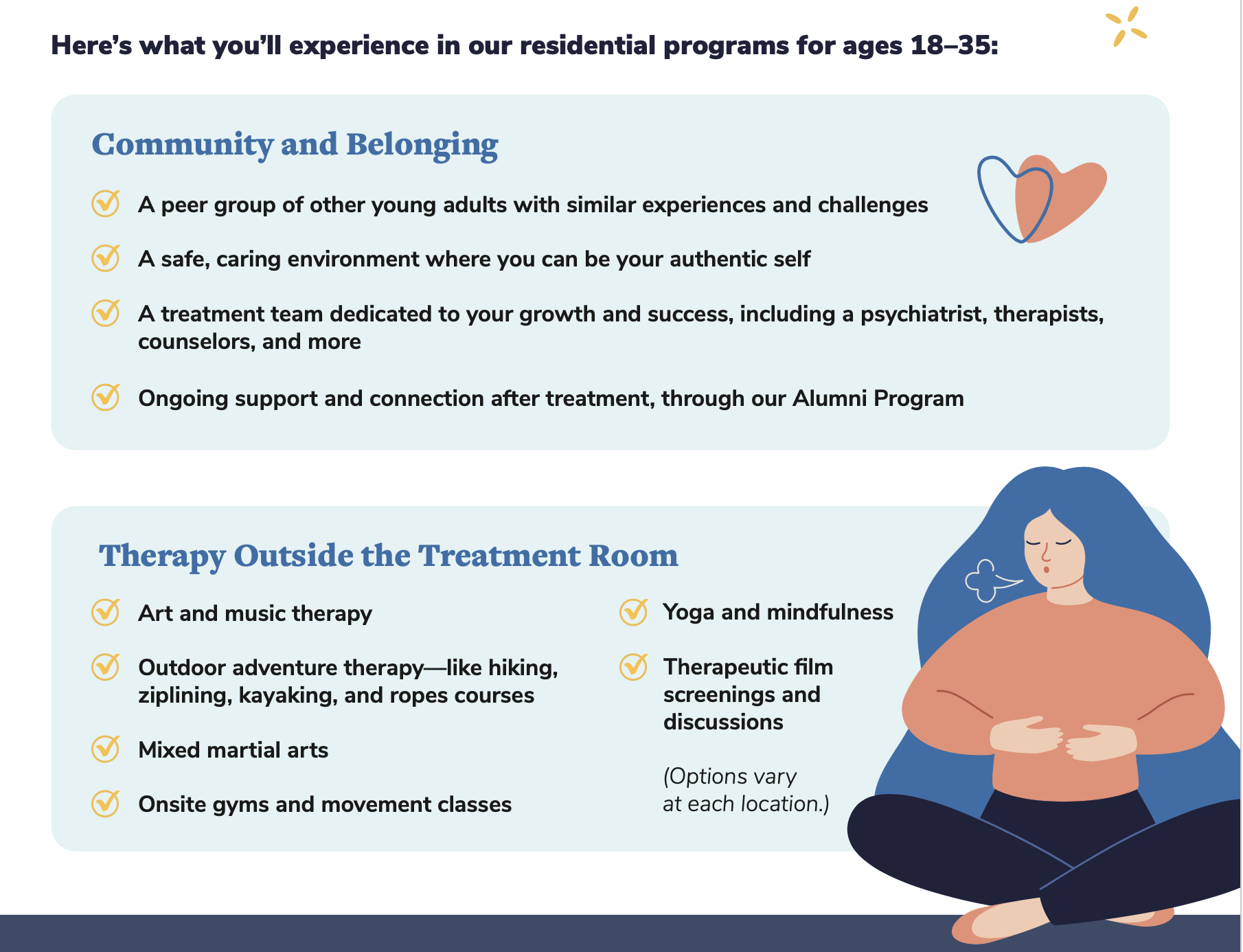
What Treatment Is Like at Newport Institute
Download our flyer describing the activities and support young adults will experience when they choose residential mental health treatment at Newport Institute.