
Social Media Narcissism: Are the Apps Creating Narcissists?
Reading Time: 6 minutesNarcissism is defined as a fixation with oneself and one’s physical appearance or public image. Many young adults could be described as narcissistic. That’s because they’re at a stage of life when they are establishing their identity and figuring out who they are in relationship to others. But is narcissism on the rise among young people today? And could social media narcissism be creating a self-obsessed generation?
Research shows that today’s young adults are more narcissistic than ever before. More than 10 percent of people in their 20s are believed to suffer from subclinical narcissism, according to Psychology Today. And it appears that social media may be one cause of narcissism. There’s a reason that selfie-sticks have been dubbed “Narcissisticks.”
Key Takeaways
- Young adults are the most narcissistic age group, and today’s college students are more narcissistic than in the past.
- Gen Z social media users who have narcissistic traits are more likely to become addicted to the apps.
- In addition, those who use social media more often are at risk of becoming more narcissistic.
- Therapy or a mental health treatment program can help young adults develop greater self-awareness and empathy.
Is Narcissism On the Rise Among Young Adults?
Research confirms that young adults are the most narcissistic age group. Not only that—they’re becoming more narcissistic. A study published in the Journal of Personality analyzed data from 85 samples of American college students. Participants completed the 40-question Narcissistic Personality Inventory (NPI). And the researchers found that, between 1982 and 2006, college students’ NPI scores significantly increased.
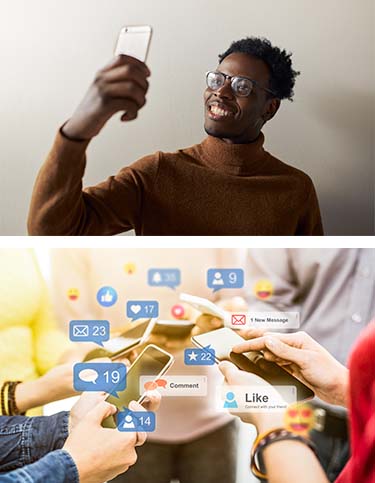
“Receiving a like on social media produces a physiological high by triggering our reward cycle. This good feeling is due to a dopamine rush in the reward center of the brain.”
A follow-up study added 22 new studies to the meta-analysis and found further increases in narcissism in young adults. Furthermore, the researchers proposed two reasons for this increase. One was a greater focus in recent years on building self-esteem in young people. The other was the internet, specifically social media, which encourages young people to focus obsessively on themselves and their public image.
Social Media and the Two Types of Narcissism
Narcissism is typically divided into two categories:
- Grandiose narcissism, characterized by feelings of superiority and entitlement
- Vulnerable narcissism, characterized by hypersensitivity to criticism and a constant need for reassurance
One study found that young adults with grandiose or vulnerable narcissism were at higher risk of TikTok addiction. And young people with a strong need for admiration (which can be a symptom of narcissistic personality disorder) were also at high risk.
Moreover, a 2020 study of young adults found that both types of narcissists were prone to Facebook addiction. Vulnerable narcissists were particularly likely to become addicted. They tended to seek positive feedback online, where they could more easily control how they appeared than in person.
The Role of Anxiety in Social Media Narcissism
The 2020 study also found that anxiety was the strongest predictor of Facebook addiction. The study authors concluded, “The higher the narcissism level, the more anxiety symptoms are experienced that foster the development of addictive tendencies.”
Both vulnerable and grandiose narcissists experienced anxiety and insecurity. These “Facebook narcissists” had self-confident online personas, but were struggling in real life. And clearly it’s not just Facebook—young adults are more likely today to be TikTok narcissists or Instagram narcissists.
Questions?
We know that reaching out can be difficult.
Our compassionate team of experts is here to help.
Narcissism and Social Media Use in Young Adults
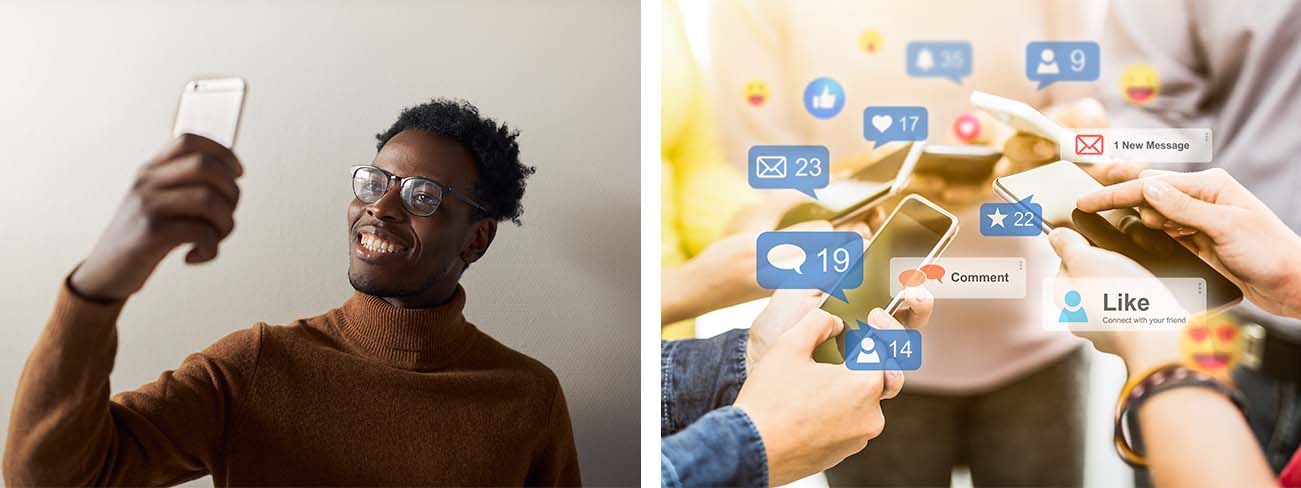
Social media, particularly Facebook and Instagram, focus on sharing (and sometimes oversharing) one’s own image and opinions. Therefore, young adults who use these platforms frequently are prone to narcissism. Research shows that higher amounts of social media use predict higher levels of grandiose narcissism. This includes time spent on social media, frequency of posts or tweets, number of friends/followers, and how often participants post pictures of themselves on social media.
In a 2018 study, researchers tracked 74 participants aged 18–34 over four months and used the NPI to quantify their narcissistic traits. Hence, they found that participants who posted large quantities of photos and selfies showed a 25 percent increase in narcissism. Specifically, those who used Facebook and other platforms that focus on images rather than words became more narcissistic over time.
Studies like this one indicate that social media narcissism has the potential to cross over into what’s known as Narcissistic Personality Disorder (NPD). In fact, participants who showed the most significant increases in narcissism actually qualified for an NPD diagnosis.
The Difference Between Digital Narcissism and Narcissistic Personality Disorder
Showing signs of social media narcissism doesn’t mean that a young adult has narcissistic personality disorder (NPD). Symptoms of NPD include having grandiose ideas about oneself and one’s achievements. People with this disorder constantly seek admiration from other people and society as a whole. Furthermore, they become fixated on external success. Additionally, people with NPD tend to lack the ability to empathize.
What makes an individual more likely to have narcissistic personality disorder? Experts believe it’s a combination of factors. These include genetics, neurobiological issues, personality and temperament. Another factor is whether they experienced childhood trauma, such as parental abuse or neglect.
Know the Facts
Narcissistic personality disorders are believed to affect around 6 percent of people nationwide, but are more prevalent in young people and in males.
How to Recover from Social Media Narcissism
The most obvious way for young adults to reverse a tendency toward social media narcissism is to get off the apps. However, that’s easier said than done, given the addictive nature of social media. Moreover, young adults tend to experience high levels of FOMO when they unplug. Hence, deleting their accounts may not be a realistic goal.
But young people can learn what Newport’s Don Grant, PhD, calls “healthy device management.” That means developing awareness and gaining practical tools for creating a healthy relationship with devices. Here are some tips for young adults who want to limit their time on social media platforms.
Do a social media self-audit.
Pay attention to how much time you spend posting, and how it makes you feel. What is your mood like during and after posting and scrolling? After you post, do you keep anxiously checking for reactions and comparing your images to others? Are your posting and social media comparison enhancing your well-being or detracting from it?
Embrace your authentic self.
Remember that our “flaws” are part of what make us interesting, real, and relatable. Practice self-compassion and try appreciating yourself for all your qualities, not just the ones you post about on social media. Building a caring and supportive relationship with yourself will help you build authentic relationships with others, off the apps.
Spend more time offline.
Less time spent posting might mean more time taking a hike, having face-to-face interactions, or doing something creative. Consider if you’ve been procrastinating or avoiding hard things by spending all your time on the apps. Has social media become a way of avoiding real-life issues or expectations?
Try caring less about what others think.
Emerging adulthood is a time when others’ opinions carry a huge amount of weight. But realistically, what people on social media think about you doesn’t have to affect your daily life. Why not focus your energy instead on cultivating friendships with people who know and love the real you? Research shows that real-life friendships increase happiness, while online networks have neutral or negative effects on well-being.
Seek treatment for mental health conditions.
Social media narcissism is often a symptom of other mental health issues, like anxiety, depression, or low self-esteem. A mental health professional can help you find positive coping strategies to manage the conditions that may be triggering social media addiction.
Treatment for Narcissistic Traits and NPD in Young Adults
Newport Institute’s clinical experts support young adults to heal and build authentic connections that create trust and self-worth, rather than comparison and self-absorption. Young adults in our specialized treatment programs learn to relate openly and honestly to others, build empathy, regulate their emotions in healthy ways, and tolerate criticism and even failure.
In summary, social media narcissism is increasing among young adults, and can be linked with anxiety and/or with Narcissistic Personality Disorder. However, help is available, and with effective treatment, young people can learn to build compassionate, caring relationships with loved ones and with the world around them.
Contact Us to Learn More and Get Started
We consider it an honor and a privilege to help young people who are struggling find their way back to thriving. And we are dedicated to ensuring that young adults receive the highest-quality and most compassionate care available.
Contact us today to find out more about Newport Institute’s residential treatment centers located nationwide.
Frequently Asked Questions
What does NPD mean?
Can you tell a narcissist from social media?
What is social media narcissism?