Why Are College Students So Anxious?
Reading Time: 8 minutesThe college years can be one of the most exciting times of a young adult’s life. But they can also be one of the most stressful. Juggling classes, work, friendships, romantic relationships, and other responsibilities can seem overwhelming at times, leading to what’s often referred to as college anxiety.
As a result, over a third of college students are dealing with anxiety conditions. In this article, we’ll explore what’s making today’s college students so anxious, and provide some healthy coping strategies for reducing anxiety at college.
What You’ll Learn
- What is causing college students to be anxious?
- Is there a connection between substance and anxiety?
- What are some healthy coping skills that can help college students handle the pressures of university life?
- When should a college student seek professional help for their anxiety?
Quick Read
The college years are often a thrilling yet challenging phase in a young adult’s life, marked by a blend of excitement and stress. Many students find themselves overwhelmed by the demands of classes, work, friendships, and romantic relationships, leading to what is commonly known as college anxiety. Recent statistics reveal that over a third of college students are grappling with anxiety disorders, with 36 percent reporting a diagnosis and 34 percent experiencing moderate to severe anxiety symptoms. Factors contributing to this mental health crisis include academic pressure, social dynamics, economic concerns, and substance use.
Several reasons underpin the high levels of anxiety among college students. For many, the transition to college signifies the first time living away from home, which can evoke feelings of loneliness and insecurity. Additionally, academic pressures—such as the need to gain admission to prestigious institutions, perform at high levels, and choose a major—can create significant stress. Students often struggle with time management and adapting to various learning styles, further exacerbating their anxiety. Social and political pressures on campus, coupled with fears about job prospects in a fluctuating economy, add to the mental strain.
The challenge of forming new friendships and navigating romantic relationships can also contribute to anxiety. The pressure to establish a social circle in an unfamiliar environment can be daunting, particularly for those who are introverted or already facing mental health challenges. Furthermore, societal expectations regarding dating can lead to additional stress, as students juggle academic responsibilities and social commitments. Substance use, often seen as a coping mechanism, can ironically intensify anxiety symptoms, creating a vicious cycle.
To combat college anxiety, students are encouraged to seek healthy coping strategies. Building connections with peers, engaging in self-care practices, and reframing negative thoughts can significantly improve mental well-being. For those whose anxiety becomes overwhelming, professional help is essential. Institutions like Newport Institute offer tailored support for college students struggling with anxiety, providing a safe space to develop resilience and address the root causes of their mental health challenges. Seeking help can lead to healthier coping mechanisms and a more fulfilling college experience.
Questions?
We know that reaching out can be difficult. Our compassionate team of experts is here to help.
Anxiety Among College Students: Stats
Many college students are dealing with anxiety. In the 2023 National College Health Assessment, 36 percent of college students reported being diagnosed with an anxiety disorder.
Moreover, 1 in 5 reported that they were experiencing severe psychological distress. And according to the most recent Healthy Minds Study (2023–2024), 34 percent of college students report dealing with moderate or severe anxiety symptoms.
A number of factors may be contributing to mental health problems among college students, including academic pressure, social and political pressure, job and economic pressure, and substance use issues. However, healthy coping skills and support from others can help college students handle these pressures, develop a balanced life, and transition well into the workplace.
Why Is There So Much College Anxiety?
Let’s look more closely at some of the reasons for the high rates of anxiety among this age group.
Everything Is New
For many college students, this is the first time being away from home and living on their own. Not having the security of family close by in addition to adjusting to a new environment can cause overwhelming anxiety and feelings of loneliness.
Additionally, a common fear among students is that they won’t get along with their roommate(s). Sharing space with someone new, getting to know their habits and routines, and learning to communicate when there is an issue can take time. It’s important to practice patience and know that your roommate is probably has similar worries and fears. You don’t have to be best friends, but you do have to respect each other’s space and learn to live together.
Academic Pressure
Academic pressure has always been a factor when it comes to stress and anxiety among college students (including prospective college students). It can be related to:
- Getting into a certain school. Students may feel obligated to get into a certain school or a particular type of school in order to fulfill personal or familial expectations with regard to their future. The college admissions scandal in 2019, Operation Varsity Blues, reveals how strong this kind of pressure can be.
- Performing at a high level. Some students are trying to fulfill personal, social, and familial obligations to perform at a high academic level, desiring to maintain a certain reputation or ensure their career prospects post-graduation. This can lead to anxiety related to perfectionism.
- Choosing a major. Many students enter college unsure of what career path they want, and they are often told that the major they choose will determine that path. This can put a lot of stress on students who are still discovering their talents and interests. Moreover, parental expectations around their choice of major (and career) can create additional anxiety.
- Time management and work volume. College students have to structure their own schedule and priorities often for the first time in their lives, which can lead to stress and anxiety as deadlines approach. Additionally, the work volume may not be what they’re used to and can feel very overwhelming.
- Learning styles. Not everyone learns the same way, and some students may struggle with the lecture format or lots of reading. Moreover, students with learning disabilities may feel increased pressure if it takes them more time to adapt their workload and the pace of their classes.
Know the Facts
Globally, 32 percent of college and university students experience anxiety, according to a review study published in the Journal of Affective Disorders Reports.
Social and Political Pressure
Colleges and universities offer a unique environment for students to learn, interact, and develop as individuals. They bring together diverse perspectives and provide space for the exchange of ideas. But at times, this can charge the college atmosphere with social and political pressure.
Activism and cause-based movements, which may be dynamic and divisive, can start on college campuses. And the pressure to take a stance can be difficult for students who are already concerned with their academic performance, job opportunities, and social communities.
Anxiety About Jobs and the Economy
College anxiety often centers around young adults’ fears about the future. As students are getting an education, they’re also evaluating their opportunities in the job market. In the technological age, jobs and career paths seem to be changing all the time, as well as the demand for certain skill sets.
This can create uncertainty and turmoil for students who may be entering crowded or vanishing industries. Students pursuing liberal arts degrees may have versatility but not a clear vocational direction, which can put pressure on their job search.
The economy also plays a significant role in earning potential and job availability. During recessions, for example, hiring freezes and bankruptcies can make the job market difficult for many new college graduates. The instability of the economy can be a real source of concern as students engage in their studies and look ahead to their future.
Friendships and Romantic Relationships
Transitioning to college involves entering a new and unfamiliar environment without the security of an existing friend circle. Making new friends in this setting can be daunting, and anxiety provoking, especially for introverts or those who already struggle with mental health issues. Moreover, college campuses are typically diverse, with students from various backgrounds, cultures, and experiences. This diversity can be enriching but may also create anxiety for those who feel different or out of place.
Additionally, there can be societal or peer pressure to be in a relationship during college, which may lead students to feel anxious about their dating status or the need to find a partner quickly (see: cuffing season). But college life is often busy, with academic responsibilities, extracurricular activities, and social commitments. Finding time for dating while managing these other priorities can be stressful.
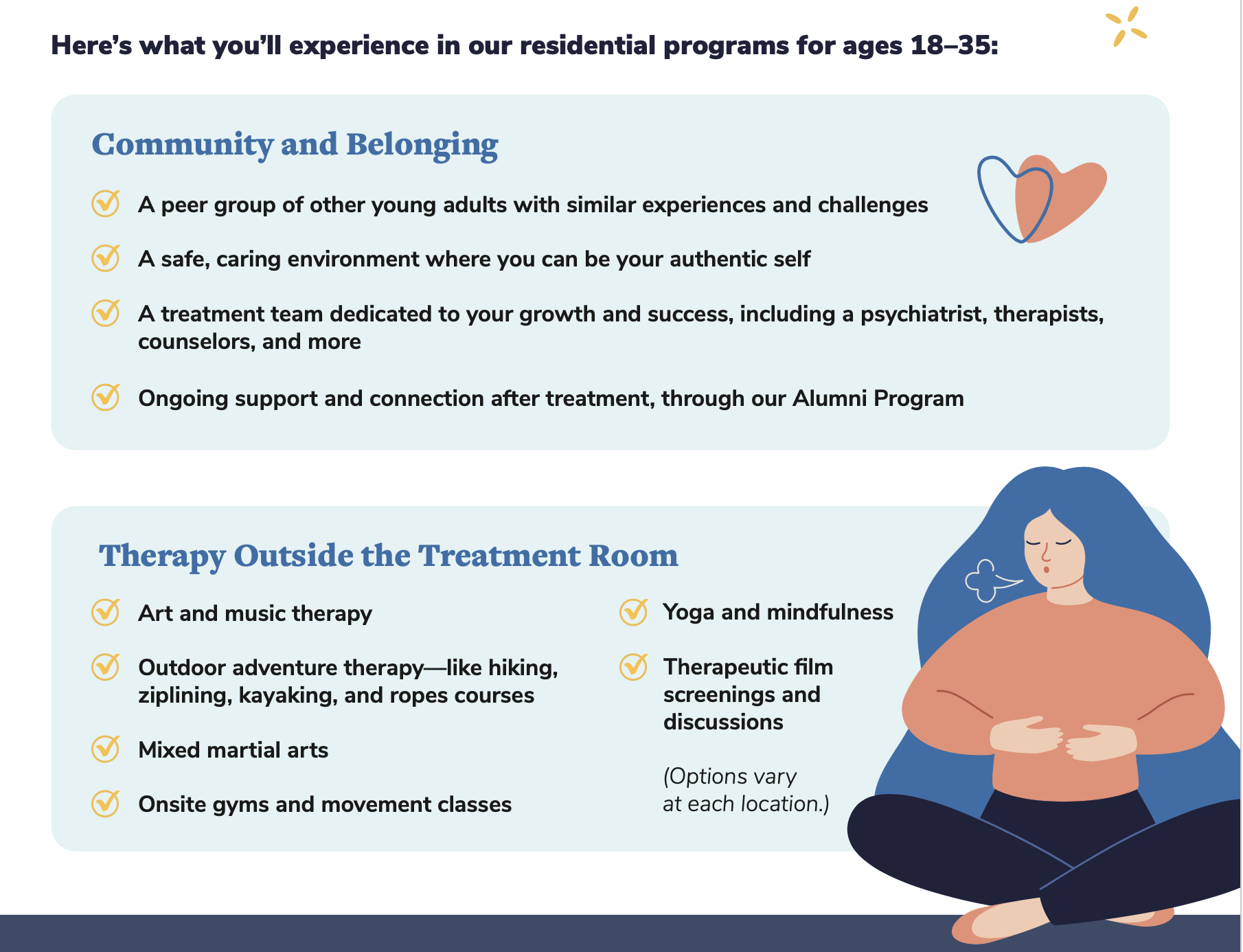
What Treatment Is Like at Newport Institute
Download our flyer describing the activities and support young adults will experience when they choose residential mental health treatment at Newport Institute.
The Connection Between Substance Use and Anxiety
Many young people turn to substance use to relieve college anxiety, but substance use can actually exacerbate anxiety. Alcohol, marijuana, and psychedelics can have cognitive, emotional, and physical effects that magnify anxiety and depression symptoms. For example:
- Anxiety after drinking alcohol (“hangxiety”) can induce feelings of dread, sweating, nausea, and a racing mind.
- Approximately 19 percent of college students report using marijuana in the past month. Nature Mental Health research found that about 1 in 200 people using marijuana will experience a serious case of psychosis.
- The New York Times reports that the use of psychedelics, like “magic” mushrooms, can lead to psychotic episodes, especially for people who have a family history of certain mental health disorders.
While substance use can temporarily reduce anxiety symptoms, it often makes them worse, in both the short and long term.


How to Cope with Anxiety at College
College can be one of the most exciting times in a young person’s life. But experiencing regular symptoms of anxiety can hold you back from experiencing all that college life has to offer. Here are some helpful ways to cope with anxiety.
Make New Connections
Finding a supportive community can make a huge difference in your college experience. Spending time with others navigating the same challenges helps you feel less alone and provides support and inspiration for the future. Join clubs or other activities to meet students with similar interests. Start a study group in one of your classes. The more you put yourself out there and meet people, the more comfortable you’ll feel.
Practice Self-Care
Self-care can include activities to promote mental, emotional, social, and physical well-being. Be sure to move your body daily. In addition to a number of health benefits, regular exercise can significantly improve mood. Take regular breaks from studying to do things you enjoy, like listening to music, meeting friends for coffee, or reading a book. Journaling is also a great way to release stress and anxiety by helping you process difficult emotions.
Replace Negative Thoughts
When negative thoughts consume you, take a step back and reframe the thought. If you are concerned that you are going to a campus event where you don’t know anyone, think instead that it’s a great opportunity to meet new people. Negative thoughts can spiral quickly into anxiety, therefore practicing relaxation and deep breathing exercises can be beneficial calming strategies.
When to Seek Help
If your anxiety is overwhelming and is preventing you from participating in or enjoying daily activities, talking with a mental health professional can help. Mental health services may be available on campus or online to help you get started. In some cases, a mental health leave of absence may be a good choice. But it’s important to talk to a professional to explore your options for treatment.
Seeking mental health treatment can help you learn healthy coping skills—like how to deal with chronic stress, overstimulation, and personal challenges. These coping strategies can improve your overall wellness, broaden your perspective, and help you lead a more peaceful, meaningful life.
Newport’s Anxiety Treatment for College Students
Newport Institute provides college students struggling with anxiety a safe place to land and an opportunity to create healthy skill sets. Our compassionate approach to treating anxiety allows students to build resilience and resolve the root causes of their anxiety. We can help students dealing with anxiety, trauma, substance use, and other mental health conditions, providing a path to healing and hope.
To find out more about our program, get in touch with us today. Our Admissions team is available round the clock to speak with you about what you’re experiencing, provide resources, and help you get started with mental health services. After that first call, you’ll have the answers you need to move forward. We are here to help.
Frequently Asked Questions
Why am I so anxious about college?
What are the main causes of anxity in college students?
How can I overcome anxiety about college?
What if you don’t like your college roommate?