
6 Reasons Why Young Adults Don’t Seek Treatment for Mental Health
Reading Time: 8 minutesYoung adults are struggling with mental health issues more than any other age group. As a result, their generation has been instrumental in reducing stigma around mental health conditions and treatment. In fact, young adults have opened the door for open conversations about mental health—in the media, among policymakers, and in universities and workplaces.
And yet, vast numbers of young adults don’t seek care for their mental health disorders. In fact, about 60 percent of adults who attempt suicide do not receive mental healthcare. A study published in the Journal of the American Medical Association (JAMA) tracked treatment trends over the past decade, and found that half of young adults with depression did not get any mental health services.
What prevents these young people from getting the care they need? In this article, we’ll look at young adult mental health statistics and examine the obstacles they face in accessing treatment.
Key Takeaways
- About half of young adults experience mental health conditions, such as depression or anxiety.
- Among this group, only about 50 percent access mental health treatment.
- Cost is the number-one obstacle preventing young adults from seeking care, but they may not realize that insurance covers mental healthcare.
- Misconceptions about treatment, concerns about confidential, and cultural stigma are also barriers to accessing mental health services for young adults.
Young Adult Mental Health Stats 2025
Before we discuss the reasons why young adults don’t seek treatment, let’s look at the current state of young adult mental health. The most recent Healthy Minds Study (2023–2024) reveals the following about the current state of college students’ mental health:
- 50 percent report having been diagnosed with a mental health issue in their lifetime
- 34 percent report dealing with moderate or severe anxiety symptoms
- 38 percent report having moderate or severe depressive symptoms
- 13 percent report experiencing suicidal ideation in the past year
- 21 percent report that emotional or mental health issues affected their academic performance for six days or more
Questions?
We know that reaching out can be difficult. Our compassionate team of experts is here to help.
While the report found slight improvements in some mental health measures as compared to the 2022–2023 study, the differences were typically only one or two percentage points.
Furthermore, research published in the Journal of Adolescent Health looked at mental health among a diverse group of young adults, using data from the national Household Pulse Survey. They found that:
- Hispanic and Black young adults were the most likely to report mental health symptoms
- About half of Hispanic/Latinx youth (51 percent), Black youth (50 percent), and white young adults (47 percent) reported experiencing symptoms of anxiety and/or depression
- Among Asian American youth, 38 percent reported mental health symptoms
What Prevents Young Adults from Seeking Care
Data on how many young adults seek mental healthcare varies among sources. As mentioned above, a JAMA study found that half of young adults with depression did not get any mental health services. Another study, this one in the Journal of Adolescent Health, found that 48 percent of young adults included in the research had mental health symptoms. Among those, 39 percent received treatment, and 36 percent reported an unmet need for mental health services.
The researchers also looked at the percentage of racial ethnicity groups that needed mental health counseling but did not receive it. About half of Hispanic young adults (44 percent) reported unmet need. Among white young adults, about a third needed mental healthcare but did not receive it. For Black and Asian American youth, that number was closer to one-quarter (22 and 27 percent, respectively).
Know the Facts
In a study of 21,000 patients ages 18 to 25 who had been diagnosed with major depression, 11,000—more than 50 percent—reported that they had not received any treatment.
The 6 Most Common Reasons Young Adults Don’t Seek Care
Why is it so hard to get mental healthcare as a young adult, even if you want it? And why do some young adults decide not to seek mental health services?
The JAMA study tracked the top reasons why young adults don’t access treatment. Researchers used data from the National Survey on Drug Use and Health. Here are the most common barriers to treatment for young people.
1. Cost
“I need therapy but can’t afford it” is the biggest reason young adults don’t access mental healthcare. More than half of young adults in the study (55 percent) cited cost as the reason they did not seek care. Young adults who think they can’t afford mental healthcare may not realize that many health insurance policies cover treatment, including therapy, outpatient programs, and residential care.
While they may not have their own health insurance, young adults can stay on their parents’ plan until age 26. Or they may be eligible for a state-funded or federally funded health insurance plan that provides coverage for mental healthcare.
Medicaid expansion in 2014 significantly reduced the number of adults with depression without health insurance. However, this isn’t helpful for all young people. For example, the study found that 24 percent of Native American participants and 10 percent of AAPI young adults still had no insurance coverage.
I was not surprised that cost remains the top barrier to seeking depression treatment among young adults, as it requires fundamental systemic change to address the affordability issue of mental health treatment.
Study coauthor Wenhua Lu, PhD, City University of New York School of Medicine
2. Not knowing where to go for services
A full 38 percent of young adults included in the JAMA study didn’t know how to find the right treatment. Hispanic and Asian American Pacific Islander (AAPI) and Hispanic participants were most likely to report not knowing where to go for services. More than half of AAPI (54 percent) reported this obstacle.
Navigating treatment options can be difficult and confusing. Young adults are sometimes overwhelmed by the range of options, and don’t know how to tell which programs will provide safe and effective treatment. However, there are specific signifiers that indicate whether a mental health treatment program provides the highest-quality care. These include:
- A program’s recognition by national accrediting bodies, such as The Joint Commission
- Whether insurance covers the program
- Evidence-based and trauma-informed modalities
- Outcomes research
- Licensed and credentialed staff
3. Believing they can deal with it on their own
About a third of young adults in the study said they didn’t seek treatment because they thought they could handle the problem without it. Despite the growing awareness around mental health, not all young adults feel comfortable admitting they need help and seeking treatment. In some family cultures, ethnic groups, or religions, mental health is still not spoken about, and anxiety or depression may be seen as a failure of willpower or self-discipline. In fact, despite the more accepting atmosphere around mental health, the Healthy Minds Study found that 41 percent of college students still believe there’s a public stigma around receiving mental health treatment.
“Often when people reach the point of considering mental health treatment, they are at a crisis point in their life,” says Leigh McInnis, LPC, Executive Director at Newport Institute’s Virginia location. “Depression, anxiety, trauma and other emotional and physical experiences can contribute to self-deprecating and shame-ridden thoughts: I should be stronger, other people wouldn’t need help for this, what is wrong with me that I can’t deal with this on my own? These thoughts serve as barriers to seeking and accepting support.”
4. Fear of ‘being committed’ or ‘having to take medicine’
Nearly a quarter (23 percent) of young adults in the study cited these reasons. Clearly, confusion and misperceptions about treatment continue to deter young people from getting the help they need. The media is partially to blame, as it continues to present a sensationalized and unrealistic view of mental health struggles and treatment.
“I often hear parents and staff refer to the film One Flew Over the Cuckoo’s Nest as the source where they learned about residential treatment,” Leigh says. “Without having the lived experience of participating in residential care, people don’t know what to expect and what it’s really like, and fear can take over in the absence of understanding and information.”
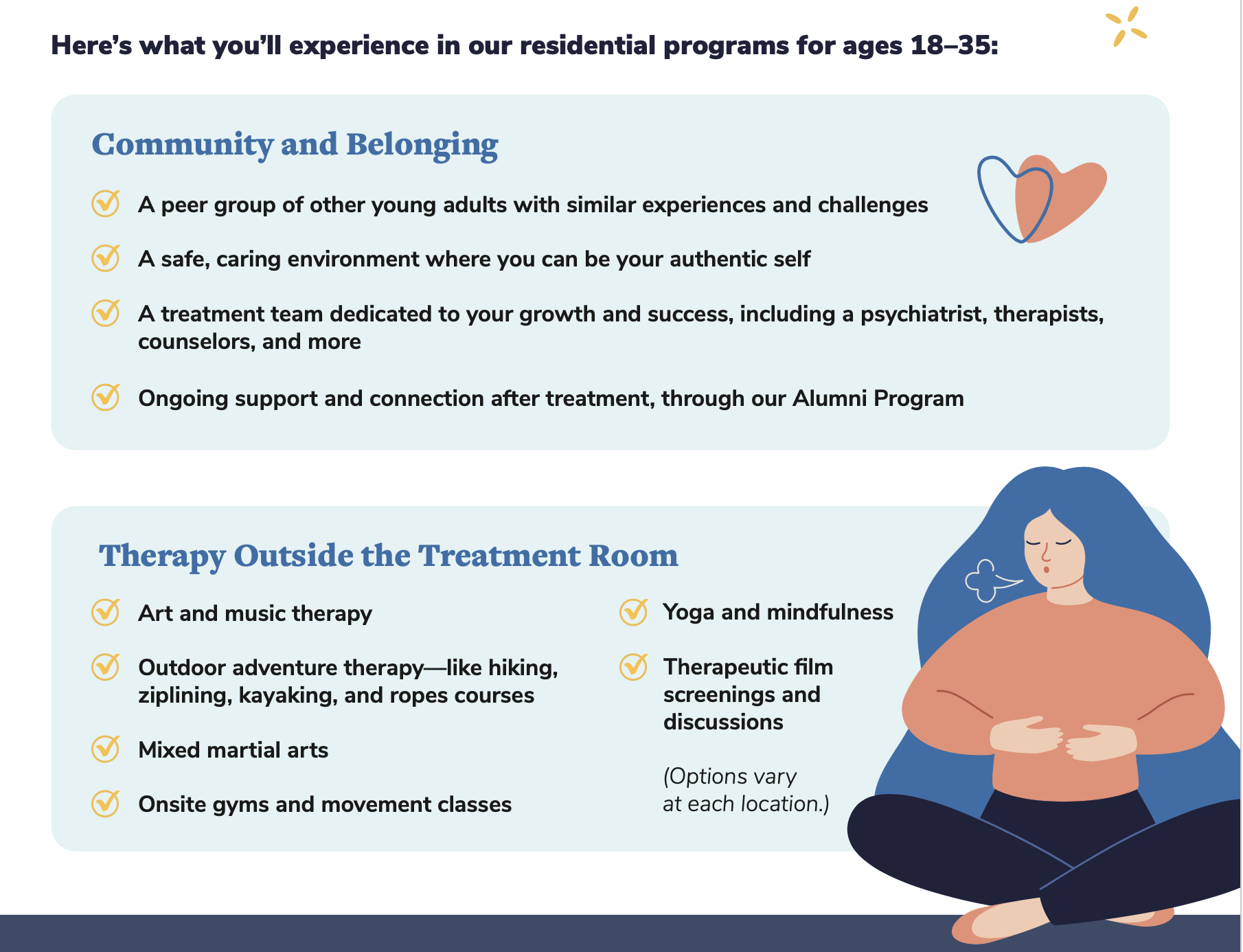
What Treatment Is Really Like
Download our flyer describing the activities and support young adults will experience when they choose residential mental health treatment at Newport Institute.
5. Worried about repercussions at work
Young adults who do have an insurance coverage through work may be worried that employers and colleagues will find out. Or they may be afraid that they’ll have to explain why they need to take work for therapy or treatment.
In general, the study found, male participants were more concerned than females about getting negative reactions from neighbors or their communities if they sought treatment. It’s important to know that your employer cannot obtain information about you from your healthcare provider directly without your authorization. And it is illegal for an employer to discriminate against people who have a mental health condition.
6. Concerns about confidentiality
Many young adults want care but are nervous that people will find out about their diagnosis and treatment. In the study, Hispanic participants (19 percent) and Native Americans (18 percent) were more likely to report fear of others finding out they sought care.
Young adults may be afraid that a therapist or treatment center will share their information with parents or employers. As stated above, this is not the case. Unless there are other legal proceedings that require disclosure, information cannot be released without your authorization.


Mental Health Treatment Options for Young Adults
Once a young adult is ready to access care, a mental health assessment with a doctor or clinician is typically the first step. Subsequently, young adults will be given an initial diagnosis and a recommendation for one of the various types of mental health treatment.
Young people with acute diagnoses—when symptoms are very serious—may need a higher level of care, such as an inpatient hospital stay or residential treatment. For those with symptoms that are not as severe, a lower level of care may be sufficient.
Treatment options for young adults include:
- Weekly therapy, online or in person
- Medication prescribed by a psychiatrist, which should always be accompanied by ongoing therapy
- Outpatient programming at an outpatient treatment center or community mental health program (up to five days a week, either full days or after college courses or work)
- Inpatient care in a psychiatric hospital or the psychiatric unit of a hospital, usually for no more than 30 days
- Residential care in a home-like setting, typically for at least 30 days, including academic and life skills programming to help young adults stay on track with their education and career goals
5 Ways Young Adults Can Access Mental Healthcare Right Away
Here are five ways young adults can get help and support as quickly as possible.
- If you are in crisis, call 911 or go to the emergency room of your local hospital.
- Take Mental Health America’s free online screening. After the screening, you will receive information, resources and tools to help you understand and improve your mental health.
- Contact your insurance company to find out about coverage for mental healthcare and what treatment facilities they work with. Many young people are not aware that their policy or their parents’ policy includes coverage for mental health treatment. If you are on Medicaid or another subsidized plan, research the mental healthcare coverage your plan provides.
- Ask your primary care provider for a referral or a list of mental health providers in your area. Keep going down the list until you find a therapist who will take new clients and preferably accepts your insurance. If they’re not taking new clients, ask them if they’ll help you find someone who does, or if they are willing to do an assessment to help you determine the right level of care.
- Call us. Newport Institute’s Admissions coordinators will help you determine what level of care may be appropriate for your or your loved one. They will also support you with the insurance verification process. If Newport Institute is not the right fit, ask to be transferred to our Clinical Outreach representative in your area to find out about the other options available. We are dedicated to helping young adults access the treatment that can help them move forward into a thriving life.
Newport Institute’s Young Adult Treatment
At Newport Institute, we support young adults in developing self-worth, healthy coping skills, and a sense of life purpose. Our successful young adult depression treatment uses a combination of clinical, academic, and life skills modalities. These include Cognitive Behavioral Therapy, group therapy, family therapy, and experiential modalities.
Each client’s treatment plan is unique. At its core, our clinical model is about fostering human connections—with friends, family, the larger community, and with yourself.
With the help of our caring clinicians, our clients emerge with a newfound sense of themselves, their values, and how to shape a fulfilling life. Contact us today to find out more about our specialized programming.
Frequently Asked Questions
How many young adults have a mental health disorder?
How many young adults have depression and anxiety?
Can insurance pay for mental healthcare?
What happens in residential treatment for young adults?