
How Does Your Physical Environment Affect You and Your Mental Health?
Reading Time: 6 minutesAs college students head to campus, videos and images of elaborately decorated dorm rooms have begun to sprout up across TikTok and Instagram. The Washington Post recently reported that students and parents are spending thousands of dollars to outfit their rooms, sometimes even hiring professional interior decorators to transform the bare-bones spaces.
But what’s the psychological impact of the trend? Will their upgraded rooms boost students’ well-being? We looked at what mental health experts and researchers say about how your physical environment reflects your mental health. Plus, we offer tips for changing your space to lift your mood—without spending thousands of dollars.
What You’ll Learn
- How does your physical environment impact your well-being?
- What does research say about the link between our living spaces and mental health?
- Does your physical environment influence your behavior?
- How can you create an environment that improves your mood?
Quick Read
Our physical environment can have a significant impact on our mental health, especially for college students who often spend a lot of time in their living spaces. Factors such as the cleanliness, organization, and overall atmosphere of a room can influence mood and behavior, sometimes without individuals even realizing it.
Research has shown that environments can affect emotional well-being in various ways. For instance, having a view of nature can promote faster healing in patients, while inadequate lighting can lead to increased stress and anxiety. Cluttered spaces have been linked to higher stress levels and can impair decision-making, making it harder for individuals to focus and feel productive.
A disorganized room can also discourage social interaction, leading to feelings of isolation. On the other hand, a welcoming and inviting space can encourage connections with others, which is important for mental health. Creating an environment that feels comfortable and uplifting can help combat loneliness and promote a positive mindset.
To enhance mental well-being, individuals can make simple changes to their spaces. Increasing natural light, using calming colors, and adding plants can create a more pleasant atmosphere. While these changes can be beneficial, it’s important to seek professional help if mental health issues persist.
Questions?
We know that reaching out can be difficult.
Our compassionate team of experts is here to help.
Call us at 855-895-4468
or complete the form below.
The Link Between Physical Environment and Emotional Well-Being
How your environment influences you isn’t just a matter of whether you find it visually pleasing. In fact, when we spend a lot of time somewhere, we no longer really notice what’s around us. The piles of paperwork on your work-from-home desk or the laundry spilling out of your closet seem to disappear when you stop paying attention to them for a few days, or a few weeks. That’s due to a phenomenon known as habituation—sometimes called “attentional blindness.”
But just because you’re not consciously focusing on your surroundings doesn’t mean they’re not taking a toll on your mental health. The way your room smells (how long has that pizza box been sitting on the bureau?), how warm or cold it feels, and the sounds in the space are as important as what we see, as your mind reflects your surroundings.
In fact, young adults who are spending all day in their rooms on their computers, working remotely or attending virtual college classes, are mostly looking at their screens. But their other senses are continually taking in various stimuli, like the temperature, scents, and noises in the room.
Whether you’re living in a city or the country, at home with your family or with roommates, in a new apartment building or an old farmhouse, your immediate environment influences you and your state of mind. And it goes the other way as well: Your mood will be reflected in your space. For example, people who are depressed often don’t have the energy to clean, organize, or open the windows to let in light and air. This creates a kind of vicious cycle, as the environment becomes another factor contributing to poor mental health.
Our outer worlds invariably affect our inner worlds and vice versa.
Danielle Roeske
PsyD, Vice President of Residential Services
How Does Your Space Affect You? A Look at the Research
Scientists have been exploring the impact of our environment on our health for decades. Here are some of the findings of research studying how living spaces affect mental health.
Views of nature can be healing
In her book Healing Spaces: The Science of Place and Well Being, researcher Esther Sternberg cites studies done by environmental psychologist Roger Ulrich. In his most well-known study, Ulrich compared how quickly patients healed after gallbladder surgery. He found that the patients who were put in a room with a view of a grove of trees consistently healed faster than those whose windows looked out on a brick wall.
Light impacts both mood and sleep
Light—whether too much or not enough—plays an important role in physical and mental health. Light directly affects our circadian rhythms (the biological clock that tells us when it’s time to sleep) and sleep habits are closely linked to mood. Insufficient levels of natural and/or bright artificial light in your room can catalyze stress and anxiety. Neuroscientists at the University of Pennsylvania found that rats who were kept in the dark for six weeks exhibited depressive behavior.
Clutter can create stress and fatigue
Furthermore, how messy and disorganized our space is directly influences our mental health. In a study of women’s cortisol levels compared to their husbands’, the wives with cluttered homes had higher stress and a more depressed mood. Along with lowering well-being, clutter has also been linked to reduced executive functioning, as well as procrastination, reduced productivity, and emotional exhaustion.
Know the Facts
Too much light in your bedroom while you’re sleeping can increase the risk of depression by 63 Percent.
A messy room can influence you to make bad decisions
Disorderly environments can impair people’s judgment and encourage them to act impulsively. That might translate into online buying sprees between remote classes, or posting that picture on Instagram that you probably shouldn’t have.
Your room can either invite or discourage connection with others
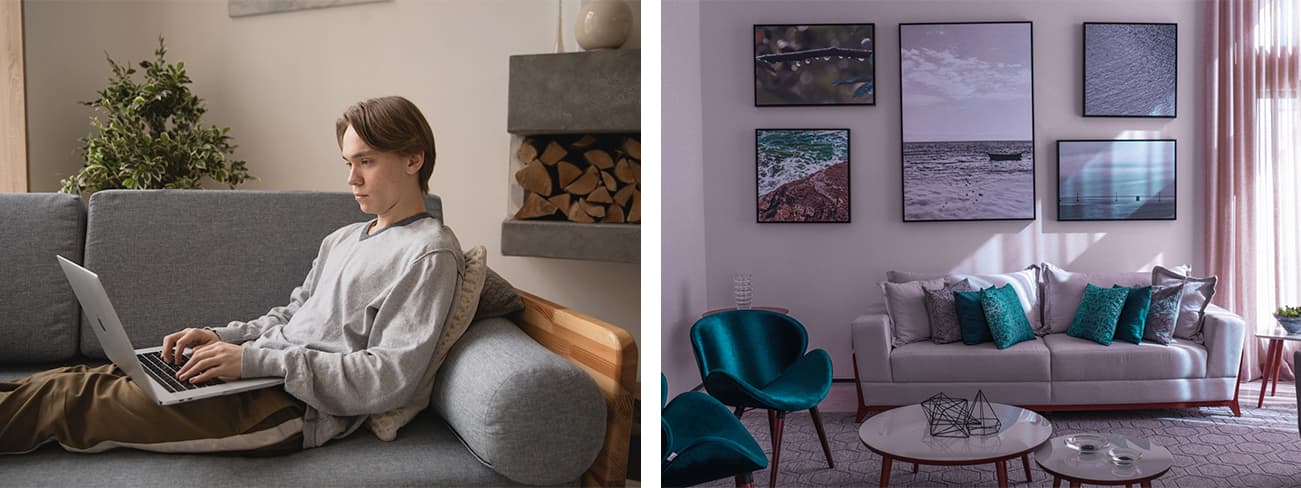
If every space in your bedroom is covered with clothes or books, and the only place to sit is your bed, family members—or your roommate—are less likely to spend time there. For some people, that might seem like a good thing, particularly if your bedroom is also where you work or go to school, which is the case for many young adults right now. But ultimately, creating a more inviting environment that others feel comfortable in will help you feel less isolated in your own space and your own mind.
Treatment spaces can encourage engagement and relaxation
Because the mental health effects of our environment are so powerful, trauma-informed care extends to the spaces where outpatient therapy, residential treatment, and therapeutic modalities take place. Relaxing colors, comfortable furnishings, and lots of light help create a healing environment.
How to Create an Environment That Lifts Your Mood
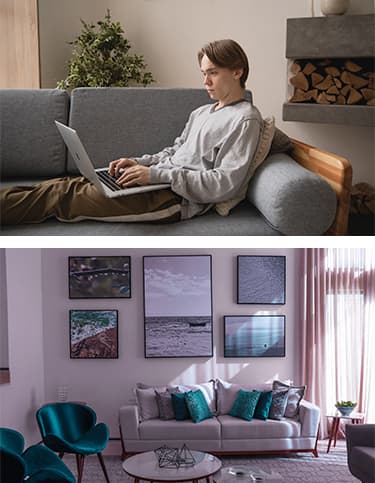
The good news is that there are easy ways to control how your environment influences you and your mental health. Try these strategies for creating a healing space, and notice if your mind reflects your surroundings.
Increase natural and warm light
- Replacie curtains with blinds that can be pulled all the way up during the day, and all the way down at night to create an environment more conducive to sleep.
- Hang mirrors to create more brightness by bouncing the natural light around the room.
- Make sure that areas where you read are brightly lit.
- Add desk and table lamps to create a more relaxing ambience than overhead lighting.
Use color to lift mood
- Paint your room a bright, light color.
- Choose an accent wall to paint a deep, vibrant shade.
- On walls facing windows, use a soft shade of white or pastel to reflect light.
- Use throw rugs or runners to bring color and life to areas of the room that need a pick-me-up.
Bring nature inside
- Decorate with potted plants and fresh flowers.
- Grow a little herb garden on your windowsill or on the fire escape outside your window.
- Even hanging a photo of nature can make a positive difference.
Organize your space
- Get rid of clutter—to avoid feeling overwhelmed, spend an hour or even 15 minutes on one area, then return to the task the next day.
- Find pretty baskets, shelves, or bins for sorting random papers and objects.
Tap into your senses
- Use aromatherapy to make your room a happier place. Keep a spritz bottle of lavender or rosewater at your desk, or small essential oil bottles to sniff when you need to shift your mood. Different scents have different effects—lavender is calming, peppermint is energizing, and so on.
- Many people find that working with music in the background improves concentration and well-being. Try different kinds of music to see which works best. At night, make your sonic environment more conducive to rest with white noise, like a quiet fan or ocean waves.
Designate different areas for different uses
- If your room is large enough, use your desk for work and reserve your bed for sleep and relaxation. This will improve your focus during the day and your sleep quality at night.
- Use folding screens or tapestries to divide the room into different areas.
These are some of the most important factors to look at when considering the question of how does your physical environment affect you. However, if your low mood persists, professional help is the essential next step.
Need Support with Your Mental Health? We’re Here to Help
Enhancing your space can be helpful for well-being, but it can’t address the underlying causes of depression, anxiety, and other mental health disorders. Contact us today to learn more about how Newport Institute’s integrated, personalized approach can guide you or your loved one to sustainable healing and a thriving future.