
The Mental Health Effects of Being Adopted
Reading Time: 6 minutesYoung adulthood is an important time of identity formation. And for young people who are adopted, that process can sometimes be more complicated. Many adoptees struggle with uncertainty about who they are, in terms of their biological lineage, adoptive parents, childhood experiences, cultural history, and/or ethnic identity.
However, with compassion and support, adoptees can develop resilience, overcome residual issues from childhood, and thrive in young adulthood. In this article, we look at some of the common emotional issues adoptees face, and how they can cope with the mental health effects of being adopted.
What You’ll Learn
- How does being adopted impact mental health?
- What are some common issues adoptees face?
- What is identity uncertainty in adoptees?
- How can young adults overcome adoption trauma?
Quick Read
This article discusses the complex mental health challenges faced by young adults who are adopted, particularly during the critical period of identity formation. Adoptees often experience uncertainty regarding their identity, stemming from their biological lineage, adoptive family dynamics, and cultural backgrounds. This uncertainty can lead to emotional struggles, as many adoptees grapple with feelings of loss, grief, and disconnection from their biological roots.
Common emotional issues among adoptees include ambiguous loss, disenfranchised grief, and adverse childhood experiences, which can manifest as attachment disorders and various mental health conditions such as anxiety and depression. Research indicates that adoptees are at a higher risk for mental health issues compared to non-adoptees, with factors like separation from biological parents and experiences in foster care contributing to these challenges. The article emphasizes the importance of understanding these common issues to provide appropriate support for adoptees.
Identity uncertainty is a significant psychological effect of adoption, as many adoptees struggle to reconcile their connections with both biological and adoptive families. This struggle can be exacerbated for those who are transracial or internationally adopted, leading to feelings of cultural displacement. However, as adoptees transition into young adulthood, they often gain a better understanding of their identity, which can help alleviate some of the emotional distress associated with their adoption.
The article also highlights the importance of coping strategies and support systems for adoptees. Seeking connection with supportive individuals, reaching out for professional help, and fostering open communication with adoptive parents can aid in the healing process. With the right support, adoptees can build resilience and work towards a fulfilling life, ultimately overcoming the psychological effects of their adoption experiences.
Questions?
We know that reaching out can be difficult. Our compassionate team of experts is here to help.
Common Issues Adoptees Face
Every adoptee is different, and the circumstances of their adoption are different. But they do face some common issues. Here are some of the experiences that young people who are adopted often grapple with:
- Ambiguous loss, the loss of something or someone, without emotional closure. This can relate to biological parents who are still “out there” but no longer connected to the adoptee. Or it can also relate to siblings or half-siblings they have been separated from.
- Disenfranchised grief can follow ambiguous loss. It refers to grief that is not publicly acknowledged or socially acceptable. For example, it may seem strange to express grief over the loss of an unreliable or absent biological parent. This hidden grief can cause emotional issues and distress.
- Adverse childhood experiences (ACES) include trauma, abuse, neglect, violence, and other major stressors, like witnessing violence, parental conflict, and exposure to substance use. Some children exposed to alcohol or substances while in utero may deal with adverse effects to their health and development.
- Attachment disorders: Adoptees with unreliable caregivers, especially in their early childhood years, may develop attachment disorders that can hinder their ability to form healthy connections.
- Mental health conditions. Adoptees may deal with depression, anxiety, PTSD, and other mental health conditions connected to their childhood experiences, grief and loss, or identity formation and personal development. Research finds that adoptees also have higher rates of ADHD and personality disorders than non-adoptees.
Identity Uncertainty in Adoptees
One of the psychological effects of being adopted is identity uncertainty. Adoptees are trying to understand who they are in relation to their biological parents and their adoptive parents. They want to know what their genetics, upbringing, and experiences mean in connection to their identity and sense of self.
Difficulty establishing this identity, especially if cultural and ethnic differences are woven in, can cause psychological distress for an adoptee. According to the American Psychological Association (APA), international adoptees can be more vulnerable to mental health issues due to cultural displacement. And transracial adoptees—children adopted by parents of a different race than their own—may feel a disconnection to their racial identity.
But many adoptees’ perspective on adoption generally changes over time, along with its relevance to their personal identity. In young adulthood, as adoptees become more independent and confident as individuals, they’re better able to handle the sometimes confusing emotions that can come with being adopted.
Research on Mental Health Conditions and Suicide in Adopted Children
Research shows that people who are adopted are more likely to experience mental health issues like anxiety, depression, and PTSD. Being separated from their biological parents, experiences in the foster care system, and/or other traumas prior to adoption can be factors in adoptees’ mental health. Furthermore, young people who are adopted may feel a sense of abandonment and rejection by biological parents.
Here are some of the studies on the psychological effects of being adopted.
- One study published in the Archives of Pediatric and Adolescent Medicine found that being adopted approximately doubled the odds of having seen a mental health professional.
- Research published in the journal Pediatrics found that suicide risk among adoptees is four times higher than for non-adoptees.
- Adopted children are predisposed to certain emotional, mental, and behavioral issues, according to Development and Psychopathology journal.
- A study in Development and Psychopathology found that “children adopted from care benefit from parents whose attitudes reflect exceptionally high levels of verbal and physical expressions of warmth.”
What Is Adoption Trauma?
Adoption trauma is a name for the emotional and psychological distress that adoptees sometimes feel as a result of the adoption process and what led up to it. The experiences that preceded the adoption can create trauma in various ways.
For example, for adopted children who go through the foster care system, the likelihood of having experienced trauma is higher. In fact, 62 percent of children are in foster care due to abuse or neglect. Other children are separated from biological family members due to parental illness, acute family distress, an absent caregiver, or parental or child disability.
These adopted children will need support and guidance to resolve trauma and learn how to cope in healthy ways. Working with a mental health professional can help adoptees resolve key issues and address the impact of their past experiences.


Should I Tell My Parents How I Feel About Being Adopted?
If you’re an adoptee, discussing your feelings and mental health with your adoptive parents may seem scary. Some young people may worry that their adoptive parents will interpret their emotions as rejection. If an adoptee is curious about or wants to meet their biological parents, they may be afraid of sending their adoptive parents the message that they (the parents) are not enough. Thus, some adoptees may hesitate to discuss uncomfortable or conflicting feelings with their parent.
However, if you have supportive adoptive parents, remember that they are focused on your well-being and want you to be honest with them so they can help. If you feel more comfortable with a neutral party present, you can talk with a professional first and then bring your parents into the conversation. Learning to communicate in healthy ways is a powerful part of your formation as a person, and expressing your feelings can lead to healing and better connections.
Coping with the Psychological Effects of Being Adopted
Learning how to cope is an important task for every person, because life can be full of challenges. As an adoptee, you may be dealing with grief, mental health conditions, relational issues, and uncertainty about your identity. But you can build resilience and discover healthy ways of coping that can enhance your feelings of hope, freedom, and personal fulfillment.
Seek Connection
Leaning on supportive, trustworthy people in your life is key, whether that’s your adoptive family, your friends, or your chosen family. You might want to explore online or local support groups for adopted people—you can find groups for young adult adoptees, adopted people of color, etc.
Reach Out for Support
If you’re dealing with severe mental health issues, problems with substance use, or thoughts of suicide, reach out to a treatment professional right away. A licensed therapist can help you process what you’ve been through, increase your self-awareness and self-compassion, and build tools for a thriving life.
Know Things Will Get Better
If you feel isolated or confused right now, know that, with support, life will get easier. You can rediscover your confidence, make positive connections, and learn techniques for managing tough emotions.
Treatment for Mental Health Issues
At Newport Institute, we understand the needs and concerns of young adults, especially those who are dealing with mental health and substance use challenges. We provide a compassionate approach to care that combines support with research-backed treatment methods for long-term healing and recovery.
We walk alongside young adults to help them rediscover their authentic selves, break free from unhealthy coping habits, build resilience, and flourish in a recovery lifestyle. To learn more about how we can help, contact us today.
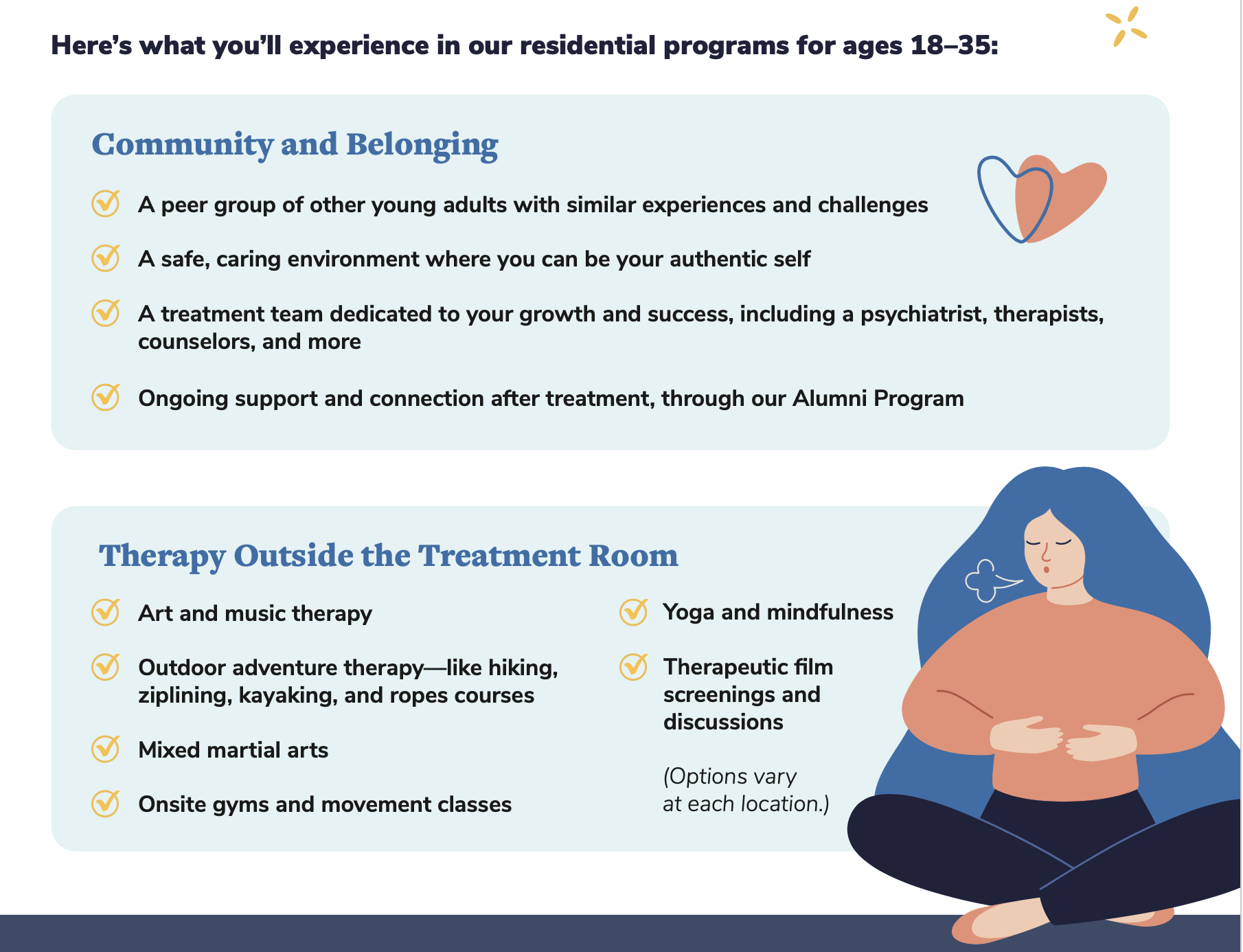
What Treatment Is Like at Newport Institute
Download our flyer describing the activities and support young adults will experience when they choose residential mental health treatment at Newport Institute.
Frequently Asked Questions
What are the psychological effects of adoption?
What are the 7 core issues of adoption?
What are signs of adoption trauma?
What are the problems with adoption identity?