
10 Ways to Slowmaxx Your Life
Reading Time: 7 minutesA new TikTok trend, slowmaxxing, has been gaining traction recently. And while it’s popular on social media, in some ways it represents the opposite of the fast-moving, never-ending social media scroll.
At its core, slowmaxxing means intentionally slowing down during everyday tasks. It’s about choosing to prioritize being present, in small, manageable ways. And it’s a sign that young adults are starting to reject the stress of hustling and striving, in favor of experiences that feel quieter and more sustainable.
What You’ll Learn
- What is slowmaxxing?
- How does slowmaxxing benefit mental health?
- What are some ways to slowmaxx in everyday life?
- When should I seek care if slowing down isn’t helping?
Quick Read
A new TikTok trend called slowmaxxing encourages people to slow down in their daily lives. This trend opposes the fast-paced culture of social media and promotes mindfulness. Slowmaxxing involves being present in simple tasks, like enjoying a cup of coffee without distractions. Young adults are increasingly embracing this practice to escape the stress of constant hustling.
Slowmaxxing counters burnout culture by inviting stillness into everyday life. It encourages individuals to engage in mindful practices, such as relaxing their bodies and appreciating small moments of beauty. Many young people face anxiety and depression due to societal pressures, making the need for slowmaxxing even more critical. This movement allows them to reconnect with their bodies and prioritize their well-being.
Failing to slow down can lead to chronic stress and various negative symptoms, including anxiety and exhaustion. The article lists several signs of burnout, such as trouble sleeping and emotional shutdown. To combat this, slowmaxxing offers practical tips for incorporating mindfulness into daily routines. Simple actions, like taking breaks or enjoying nature, can help individuals feel more grounded.
Building the habit of slowing down takes time and patience. The article suggests starting with small, manageable changes and being compassionate with oneself during the process. If someone struggles to slow down, seeking mental health support may be necessary. Programs like those at Newport Institute provide resources for young adults to recover from anxiety and burnout while learning to embrace a more sustainable pace of life.
Questions?
We know that reaching out can be difficult. Our compassionate team of experts is here to help.
What Does Slowmaxxing Mean?
Slowmaxxing is the opposite of crashing out and burnout culture. It’s the practice of inviting more stillness into your life in purposeful, mindful ways. It can mean sipping your coffee without multitasking, spending time outside without your phone, or consciously relaxing your shoulders when you notice they’re up to your ears.
Humans weren’t designed to race through each day. But today, young people (and older generations, too) feel stuck in cycles of stress about the past and fear about the future. Our nervous systems haven’t evolved to handle the constant pressure to be productive and efficient 24/7.
Why Young Adults Are Trying to Slow Down
Young adults have many unique challenges, which are contributing to high rates of anxiety, depression, and substance use. They’re struggling to cope with issues like isolation and loneliness, direct and indirect exposure to global crises, and the effects of scrolling endlessly through content. Much of modern society revolves around achievement and speed, usually at the cost of connection, rest, and mental well-being.
At its core, slowmaxxing is a rejection of that system. It pushes back against the breakneck pace of life and the belief that your worth is tied to how much you accomplish. It invites you to slow down, tune into your body, listen to your needs, and rediscover what it means to simply exist as a human—not a machine. With recent studies showing more than one-third of college students reporting frequent symptoms of burnout, this movement toward slowness isn’t just refreshing; it’s necessary.
What Happens When You Don’t Slow Down
Why does slowing down matter? If you keep pushing without pausing, your body eventually fights back. Chronic stress floods your system with cortisol, adrenaline, and other stress hormones, keeping you stuck in survival mode.
When you don’t slow down, you might experience:
- Constant anxiety and overthinking, even if those are invisible to everyone else
- Numbness or emotional shutdown
- Physical, emotional, and mental exhaustion
- Trouble sleeping, waking up exhausted, or persistent fatigue
- Physical symptoms like headaches, stomach issues, muscle pain, or illness
- Total burnout or crashing out
How to Slowmaxx: 10 Slowmaxxing Strategies for Everyday Life
The beauty of slowmaxxing is that it doesn’t require you to overhaul your life or adopt a bunch of new habits. While it can involve shifting parts of your daily routine, it’s just as much about bringing more attention and ease to the things you already do. Whether you’re trying something new or simply moving through your usual day, here are some small, real-life ways to feel more present and grounded.
1. Start your day without technology
Before you reach for something digital, spend a half hour journaling, reading, or stretching. Jumping straight into scrolling or work chaos reinforces a sense of hypervigilance, or fight-or-flight mode. Choose something that reminds your nervous system that it’s safe.
2. Unclench your jaw
When you notice yourself rushing through a task (any task—washing dishes, cleaning the bathroom sink, putting your shoes on), intentionally slow yourself down and release some tension in your body. Unclench your jaw, unfurrow your brow, let your shoulders drop, relax the tension in your hips. Try setting an alarm to remind you every hour or so.
3. Create micro-rituals
- Use a favorite glass for water or coffee and sip slowly.
- Take three deep breaths before opening emails.
- Light a candle before dinner.
- Sit in the sun for five minutes and do nothing else.
- Walk or bike to errands or your commute when you can, and don’t rush.
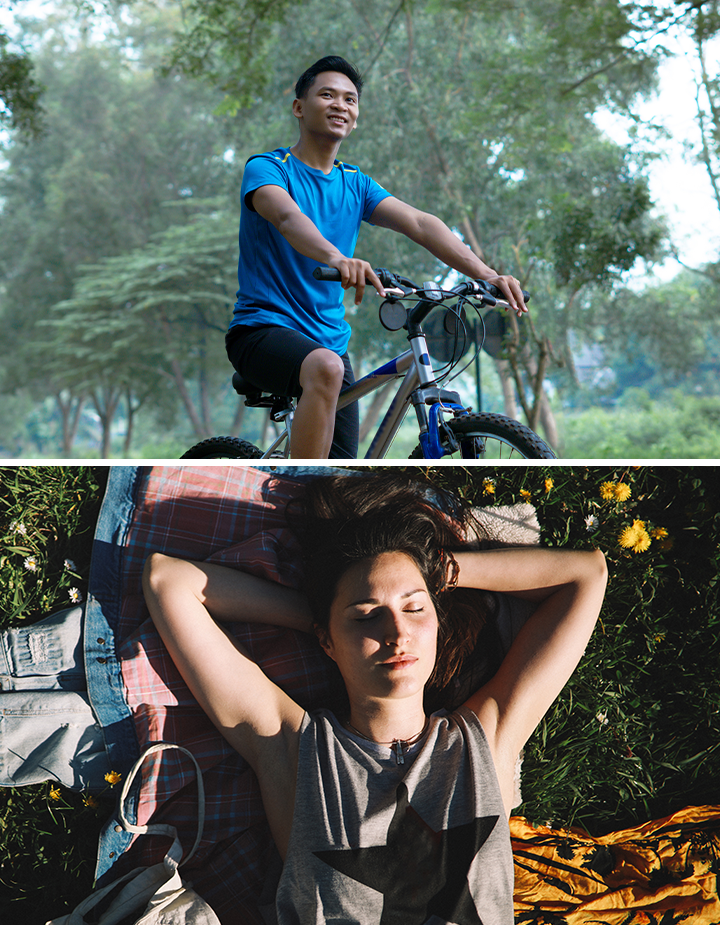
4. Go for a bike ride or a walk without your phone
Try to engage all your senses. Notice the sounds around you. Look at trees, clouds, bugs, and shadows. Let yourself be surprised.

5. Take stretch breaks
Every few hours, pause to stand up, breathe, and stretch your body. Let your spine unhunch. Feel the blood flow back into your limbs.
6. Notice everyday beauty (aka “glimmers”) around you
Glimmers are the opposite of triggers. They’re small moments of beauty, safety, or connection that support your nervous system. It might be sunlight through leaves, a stranger’s kind smile, a perfectly ripe piece of fruit, or a song that helps you breathe more deeply. When you intentionally look for these moments, you train your brain to notice calm and positive emotions, rather than chaos and negative thoughts.
7. Feel your feelings instead of pushing them away
When a big emotion hits, pause. Where do you feel it in your body? What does it look like: color, texture, shape? Get curious instead of reactive. It’s easy to feel afraid of negative emotions, but the more you push them away, the stronger they’ll become.
8. Go to the library
Browse the shelves. Read a novel in hard copy, instead of an e-book. See what it feels like to turn the pages. Take your book to the park and read on a blanket.
9. Stick your face in some flowers
Smell them. Stare at them. Watch the bees flying around, if there are any. Notice how many shades of pink or yellow or purple there really are.
10. Watch ducks
Seriously. Find a pond and sit there for a while. Ducks have no concept of productivity culture, and they’re doing just fine. You can do the same with songbirds, squirrels, or pigeons.
Slowmaxxing isn’t about being lazy. It’s about reclaiming your attention, your body, and your time, and remembering that you’re allowed to move at a pace that doesn’t leave you feeling wrung out.
What If Slowing Down Feels Hard?
Slowing down is a lot easier said than done if you’ve spent your life speeding up. You might experience a sudden rush of difficult emotions when you stop moving, which isn’t exactly a great motivator to let yourself be still.
It sounds counterintuitive, but your ability to slow down will improve as you get comfortable with feeling uncomfortable. One of the keys to feeling safe in slowness is learning to sit with difficult emotions, boredom, or the sense of wrongness that often comes up when you stop moving and doing.
How to Build Your Slowmaxxing Muscles
If you find yourself resisting the idea of slowing down, that’s normal and okay. Try implementing tiny and achievable habits at first:
- Write down a list of pros and cons: the drawbacks of rushing that impact you daily, and how slowing down might help.
- Try just one tiny way to slow down, like a few purposeful breaths every day, to keep slowmaxxing feeling manageable rather than overwhelming.
- Be patient with yourself. You’ve spent decades learning how to rush; it takes time to learn how to slow down. Give yourself plenty of compassion and grace, especially when you notice that presence feels impossible.
- Practice simply noticing. When you catch yourself rushing, pause. Take one slow, deep breath. That’s enough.
When to Reach Out for Support
Slowmaxxing is a great tool, but sometimes it’s not enough on its own. If you’re feeling like you’re always on the edge of a breakdown or can’t stop running around, it’s time to get help.
Reach out for mental health support if you:
- Feel emotionally dysregulated most days
- Are constantly overwhelmed and can’t slow down without panicking
- Find yourself shutting down, isolating, or lashing out
- Keep using substances to cope
- Feel stuck, numb, or hopeless and don’t know how to move forward
Young Adult Treatment at Newport Institute
At Newport Institute, we help young adults ages 18–35 learn how to slow down and recover from anxiety, depression, trauma, burnout, and more. When your nervous system is maxed out, we’re here to help you build a life that feels sustainable and supportive.
Our residential and outpatient programs for young adults ages 18–35 take a comprehensive, evidence-based approach to treating underlying mental health concerns. Our team of licensed therapists, psychiatrists, medical professionals, and mental health practitioners specialize in working with young adults, and understand what it’s like to be coming of age in today’s fast-moving world. We’re here to help you heal mentally, emotionally, physically, and spiritually.
What You’ll Experience at Newport
Newport Institute treats primary mental health conditions such as anxiety, depression, trauma, PTSD, and mood disorders to address underlying concerns and help set up a better foundation for rest. Our approach includes:
- Attachment-Based Family Therapy to address childhood dynamics and communication patterns, and build trust and understanding
- Group therapy to feel less alone in your experiences
- Individual therapy for personalized support and healing
- Experiential therapies like art, music, movement, and adventure to build self-worth and develop new coping skills
- Psychiatric care for medication support when needed
- Life skills programming, including resilience building, mindfulness, and emotional regulation skills, to help you feel equipped to deal with life stressors
Start your healing journey today. Contact us for a free mental health assessment, develop a support network, and regain your love for life. Contact us today to learn more.
Frequently Asked Questions
What is slowmaxxing?
Is slowmaxxing just another social media trend?
Why is slowmaxxing good for your mental health?
How do I know if I need to slowmaxx?
How can I start slowmaxxing with a full schedule?